
Screven Parole and Probation
Parole and probation can both place a person under rules in the community, but they begin in different ways. Parole is a conditional release from a Georgia prison sentence approved by the State Board of Pardons and Paroles. Probation is part of a sentence imposed by a court. A person released on bond from the Screven County Jail is not on parole merely because the jail released them. The court docket, GDC record, and supervision record must be read together.
| Record | Parole | Probation |
|---|---|---|
| Starting authority | State Board of Pardons and Paroles | Sentencing court |
| Custody link | Release from a state sentence | Court sentence, sometimes without prison |
| Field supervision | Georgia Department of Community Supervision | Georgia Department of Community Supervision |
| Best proof | Parole decision, GDC status, DCS confirmation | Court disposition and DCS confirmation |
- Discharge
- The formal end of a sentence or supervision term.
- Absconder
- A supervised person reported as no longer maintaining required contact.
- Detainer
- A request or hold that can keep a person in custody for another authority.
Verify Screven Post-Release Supervision
Start with the custody system that released the person. A local jail release record may identify bond, probation, a court order, transfer, or another reason. A GDC result may show state custody, sentence data, current status, and release-related fields. Neither record alone always names the current field office.
- Request the booking and release reason from the Screven County Sheriff's Office contact path for a local jail event.
- Check the GDC offender query when state custody is possible.
- Review the monthly parole decisions and the person's available parole record.
- Use the DCS office locator rather than assuming that an old office assignment remains current.
- Compare the result with the sentencing case through re:SearchGA or the correct Screven County court clerk.
Locate Screven Supervision Records
The research did not establish a durable Screven County field-office address and direct number. Hard-coding an uncertain office could send a caller to the wrong place. DCS maintains the current assignment and its official locator supplies the live office route. Ask about the office responsible for the person's case, not merely the office closest to Sylvania.
Georgia Department of Community SupervisionOfficial agency site
Current field-office locator
DCS handles field supervision, while the parole board makes parole decisions and a court imposes probation. Those roles should not be merged. A records question about the original jail release belongs with the sheriff; a question about the sentence belongs with the court or GDC.
Screven Supervision Status Changes
Conditions vary by order and may include reporting, travel limits, program participation, payment duties, or other case-specific rules. A violation allegation is not the same as a final revocation. DCS, the court, or the parole board must act through the process that applies to that supervision type.
An absconder notation means the agency reports lost required contact. It does not by itself explain whether a warrant exists, whether the person has been arrested, or whether the case has been resolved. Check the supervising authority and the court record. VINELink can provide custody-change alerts when a participating agency supplies the record, but it is not a complete supervision registry.
Ending Screven County Supervision
Supervision ends through a formal discharge, expiration, court action, parole-board action, or another case-specific order. Time passing is not enough proof. Obtain the discharge entry from the agency that owns it. For probation, that normally means the sentencing court and DCS. For parole, use the parole board, GDC, and DCS records.
A person may finish jail custody while the court case, sentence, or supervision continues. The Screven County released-inmate search and records path explains how the original jail release record fits with later court and corrections records.
Screven Parole Decision Records
The parole consideration material explains that eligibility and release are not the same. A person may become eligible for review and still be denied. A grant may remain subject to conditions and processing. A denial leaves parole unapproved at that review, while a deferral moves review to a later point. Serious violent felony rules in O.C.G.A. § 17-10-6.1 can restrict parole and required service.
The official State Board of Pardons and Paroles is the authoritative source. Monthly decisions are useful for state-sentenced people, including some people housed at Screven County Prison. They are not a list of everyone released from the Screven County Jail.
Correct Screven Release Records
When a release or supervision record appears wrong, direct the correction to the system that owns the entry. The sheriff controls its booking and release record. The court controls its docket and sentence. GDC controls state-custody fields, and DCS controls field-supervision information. A broad request to an unrelated office will not fix the source record.
Georgia's open-records process permits a narrow request for an existing record. Identify the person, date range, booking or case number if known, and the exact field in dispute. Under O.C.G.A. § 50-18-71, an agency may address response timing, retrieval, redaction, and lawful costs. Property left at the jail and a DCS supervision record are separate matters and should be requested separately.
Screven County Parole Review
Parole eligibility is only the point at which the State Board of Pardons and Paroles may consider a state-sentenced person. It is not a release date and does not guarantee a favorable result. Sentence type, offense, applicable law, board rules, and the individual case record all affect review. The board's Georgia parole process and consideration material explain the statewide system. Screven County Prison makes this state path especially relevant locally because it houses people in a state-sentenced custody setting.
A grant means parole has been approved subject to conditions and processing. A denial means release on parole was not approved at that review. A deferral moves consideration to a later point. A rescission can withdraw an earlier favorable action. Public labels and dates should be read on the current board record. None of these entries is a county-jail recent-release list. Someone who bonds out of Screven County Jail is not transformed into a parolee by the bond release.
Georgia parole authority is grounded in Title 42, Chapter 9. The governing record should be checked before drawing any conclusion about eligibility, release, or discharge.
The Georgia Department of Community Supervision source shown here documents the agency responsible for field supervision.
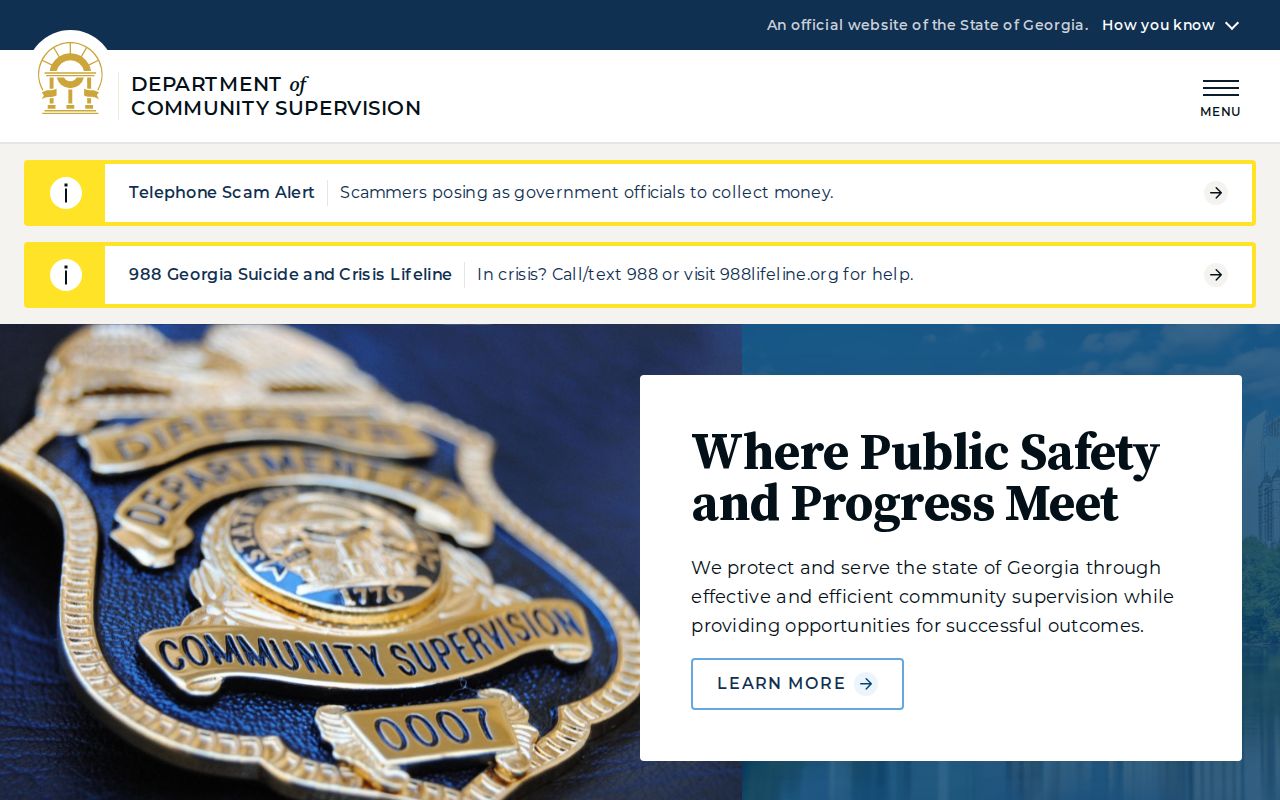
The agency page identifies the correct statewide supervision system, while its location finder supplies the current office route for an individual Screven County case.
Screven Probation Court Records
Probation begins with a sentencing court, so the court disposition is the starting record. It may show the sentence, term, reporting conditions, fines, restitution, jail credit, and later modification or revocation entries. Search re:SearchGA where the case is available, or use the Georgia court system and the correct Screven County clerk. Search by case number when possible because similar names can produce the wrong case.
A jail release reason of “probation” or “court order” should be reconciled with the signed court entry. The jail record answers when local custody ended. The court record answers what sentence remained. DCS can then identify the field-supervision path. If no public docket appears, that does not prove that supervision ended. The case may be in another court, not online, restricted, sealed, or indexed differently.
Probation can also be revoked or modified. An allegation does not establish the final outcome. Look for the resulting court order and, if custody followed, compare it with the sheriff or GDC record.
Screven Supervision Custody Alerts
Georgia VINELink may provide custody status and notifications for participating sources. It is useful when a supervision violation leads to a new jail or prison custody event. Registration can support phone, email, text, TTY, or other methods offered by the current interface. Phone notices may require a PIN or acknowledgment so the system knows the alert was received.
VINELink does not prove the terms of parole or probation. It also does not replace a court revocation order, parole-board action, or DCS record. If the person disappears from a searchable custody view, confirm the event with the source agency instead of treating the missing result as a discharge.
Note: Custody notification and supervision verification answer different questions and should be checked through their respective source agencies.
Screven Release Property Questions
Research Section 19 identifies a local records and property issue: no public release feed exists to settle questions from roster behavior. Direct a request about property, receipts, or the jail release record to the Screven County Sheriff's Office. Ask for the specific custody event and identify the item or field at issue. Do not send a jail-property question to DCS simply because supervision began after release.
Corrections require the same source-based method. The sheriff corrects its booking and release information. A clerk addresses a court docket. GDC addresses its offender and sentence fields. DCS addresses its supervision record. This separation prevents one office from being asked to alter a record it does not own.
A written correction request should quote the disputed entry, identify the source record, and attach the order or record that supports the requested change when lawful to do so. Keep proof of submission and any agency reply. If the issue concerns whether the person has completed supervision, request the actual discharge record rather than asking an office to infer completion from an old projected date. For jail property, identify the booking event and the property receipt if one exists. These focused requests preserve the distinction between a Screven County release, a Georgia sentence, and later community supervision.