
Screven Projected and Actual Release
A projected release date is a calculation, not proof that release occurred. GDC may show a maximum possible release date or another release field for a state-sentenced person. The actual date depends on sentence rules, credits, parole action, court orders, discipline, and holds. A pretrial detainee at the Screven County Jail has no fixed sentence-based date.
Local jail timing and state sentence computation are separate. A sheriff record covers the local event. GDC owns state-custody sentence fields.
Find Screven Projected Release Dates
Identify the custody track first.
- For county jail custody, request status from the sheriff.
- Check the sentencing or pending case through the court.
- For state custody, open the GDC offender query.
- Search by GDC ID, case number, name, or another offered field.
- Review status, institution, sentence, and release-related dates.
- Verify parole with the parole board and supervision with DCS.
The Screven County release-record path helps after a person leaves the roster.
Screven State Sentence Computation
Computation starts with the judgment and recognized custody credit. Credits or program rules may affect some sentences, but they cannot be assumed from the charge alone. GDC's public field summarizes a state calculation.
O.C.G.A. § 17-10-6.1 imposes mandatory service and parole limits for covered serious violent felonies. The often repeated “85 percent” phrase is not a universal formula for every Screven County case. Eligibility for review is not approved release.
Why Screven Release Dates Change
A date moves when an input or legal decision changes.
| Factor | Possible effect |
|---|---|
| Corrected judgment or credit | Changes the calculation |
| Earned-credit adjustment | Changes a date where applicable |
| Disciplinary loss | May reduce credit |
| Parole action | Changes the expected path |
| Detainer | Can prevent community release |
| Transfer | Continues custody elsewhere |
Confirm Screven Actual Release
For a local event, ask the Screven County Sheriff's Office for date, time, reason, and receiving agency. For state custody, compare GDC status with parole or DCS records.
The VINELink Inmate Search can provide custody alerts but may lag. Court orders, GDC fields, and sheriff records remain the source.
The Georgia Department of Corrections site shown below begins the state path.
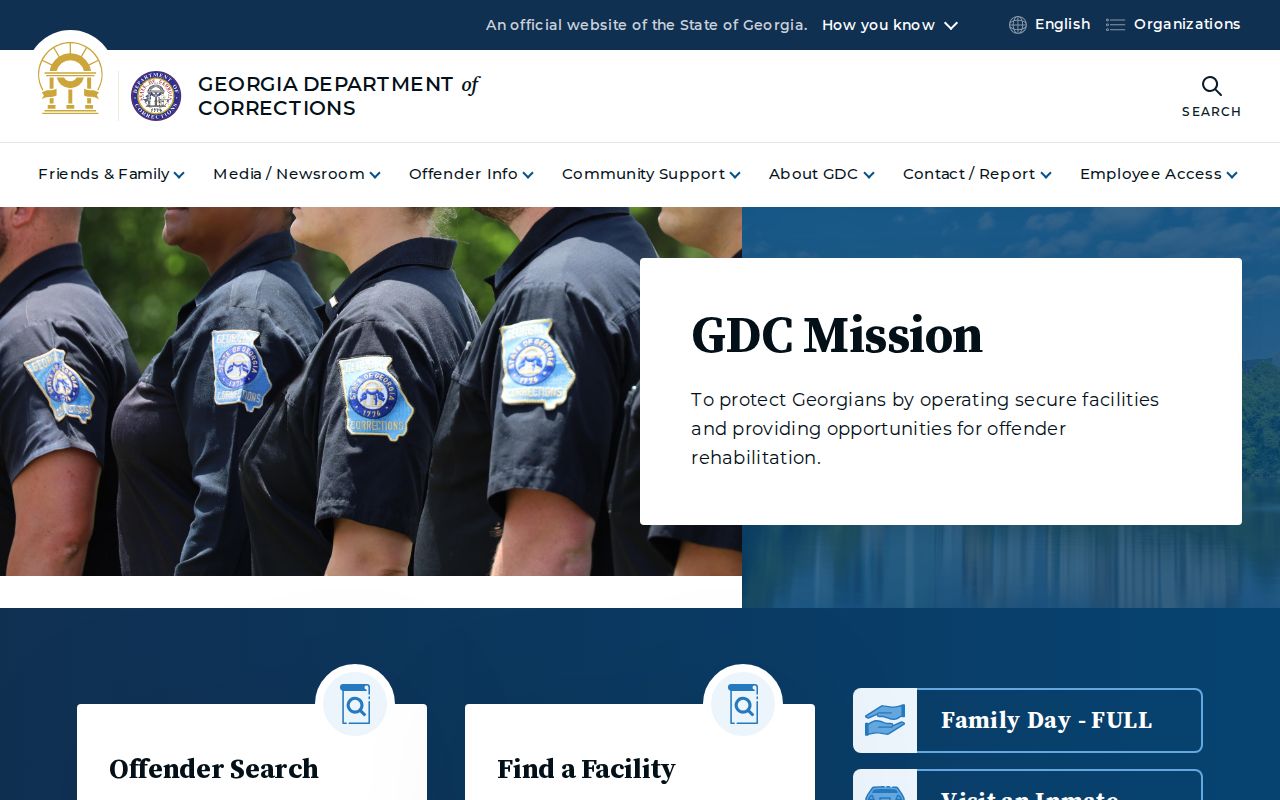
This source applies to GDC custody, not every county jail stay.
Screven Jail Versus GDC Dates
A Screven County Jail date is a local custody question. A person held before trial does not have a fixed release date based on sentence computation. Release can depend on posting bond, a judge changing bond, dismissal, a plea or sentence, another court order, or transfer under a hold. The jail and court are the sources. No public Screven County jail good-time policy was found, so a local date should not be calculated from generic state-prison credit rules.
Screven County Prison belongs to the GDC state-sentenced path. Its offender record may contain a maximum possible release date or another release-related field. That date can reflect the judgment, recognized jail credit, applicable correctional credits, statutory limits, and later changes. It is more durable than a family estimate, but it remains a projection until custody actually ends.
| Custody type | Date source | What may change it |
|---|---|---|
| Screven County Jail | Sheriff record and court order | Bond, sentence credit, order, transfer, hold |
| Screven County Prison or GDC | GDC release field | Credits, discipline, parole, court change |
| Parole | Board decision and processing | Grant, denial, deferral, rescission, detainer |
| Federal prison | BOP release date | Federal computation and court orders |
How Screven Release Dates Compute
Screven County's distinctive date issue is the split between state sentence computation and local jail timing. GDC may publish a maximum possible release date. The sheriff's release record instead documents when a local booking ended. A court order supplies the legal basis for bond, time served, probation, or confinement. These fields cannot be swapped.
Weekend and holiday timing is not documented by a public Screven County policy in the research. Do not promise a lobby time or advise anyone where to wait. Actual processing can depend on court paperwork, bond processing, staffing, transport, receiving-agency pickup, and administrative checks. The sheriff is the current source for local time-of-day logistics.
For state custody, parole consideration adds uncertainty. Eligibility only permits review. A grant can still require conditions and release processing, while denial or deferral leaves the person in custody. The State Board of Pardons and Paroles consideration material explains the board path. Use DCS locations only after release into field supervision is established.
Screven Holds Alter Release Timing
A detainer is notice that another authority has a custody interest. It can prevent a projected community release even when one sentence reaches its expected date. A local record may show release to GDC, another county, USMS, or ICE. That entry marks the end of Screven County Jail custody, not necessarily the end of all custody.
Follow the named receiving agency. GDC handles a state transfer. The BOP Inmate Locator and PACER cover different parts of a federal path. The ICE detainee locator applies only when the record supports immigration custody. A projected release should never be converted into an actual community-release claim without this check.
Verify Screven Release Date Changes
Save the source, search date, identifier, status, and displayed date. Then compare the same person across the correct records. For GDC, use the GDC ID when available. For court records, use the case number. For the sheriff, use the booking number. Names alone can match the wrong person or combine two custody events.
If the date changes, ask the custodian that owns the field. GDC explains a state computation; the sheriff explains a local release entry; the court explains its order; the parole board explains board action. VINELink is valuable for alerts, but its feed can lag and does not replace those formal records. A date that disappears may also reflect a corrected record, restricted access, or a system update rather than an immediate release.
Screven Parole Date Decisions
Parole is conditional release from a prison sentence under board authority. It is not bond, probation, or automatic sentence credit. A person can become eligible for consideration without receiving a grant. The board can deny or defer release, and a favorable action can still require conditions and administrative processing before the person leaves. In some circumstances a favorable action can be rescinded. The projected date must therefore be read alongside the exact board outcome.
The State Board of Pardons and Paroles publishes process information and public decision material. Start with the GDC offender record to confirm the person and state sentence. Then consult parole sources only when the sentence and status make parole relevant. Monthly decisions or general eligibility material do not replace the person-level GDC status, and a board grant should not be reported as a completed release until custody records confirm it.
Probation follows a court order and often begins without a prison release. A person can leave Screven County Jail to probation after a local sentence or court ruling even when no GDC prison date exists. The court disposition explains the term, while the Department of Community Supervision may handle field supervision. Ending supervision is also distinct from leaving custody. A discharge or court order may be needed to confirm that later event.
Screven Release Date Field Inventory
Record the fields that make the date intelligible. For a local booking, save the booking number, admission date, release date and time, release reason, court and case number, bond, and receiving agency. For GDC, save the GDC ID, current status, most recent institution, sentence and offense information, and the exact label on each release-related date. For federal prison, save the BOP identifier and displayed release date. Identifiers help separate people with the same name and keep two custody episodes from being merged.
A release reason can be more informative than the date itself. Bond means the case may continue. Time served points to the sentence and recognized credit. Court order requires review of the docket. Transfer identifies another custodian. Parole points to board action and possible DCS supervision. Discharge can indicate the end of the state custody obligation shown by that record. Define the term from the source instead of assuming every field means release to the community.
When an official field conflicts with an older screenshot or message, return to the office that owns it. Ask whether a judgment was corrected, a credit changed, a detainer appeared, a parole action changed, or the record was updated. Do not calculate a replacement date from partial facts. Sentence computation is a records function that depends on the whole judgment and applicable law.